Alright, let’s dive into something that’s probably a headache for every alcohol supplier out there—tax regulations. I’ve been in this game for 7 years now, and let me tell you, it’s not just about getting a good deal on stock or making sure bottles don’t break in transit. Taxes? That’s the stuff that can make or break your profit margins if you don’t get it right. Alcohols

First off, let’s cut the crap—alcohol taxes aren’t one-size-fits-all. In fact, they’re super dependent on where you’re selling it, what kind of alcohol it is, and even how strong it is. Let’s start with the basics I wish someone told me when I first started: federal taxes. In the US, the federal alcohol tax is handled by the Alcohol and Tobacco Tax and Trade Bureau (TTB). For spirits, right now it’s like $13.50 per proof gallon—wait, proof gallon means if a bottle is 80 proof (which is standard), that works out to $2.70 per 750ml bottle. That’s a big number when you’re moving thousands of cases. Wine is lower—around $1.07 to $3.40 per gallon, depending on the alcohol content, and beer is like $18 per barrel for the first 60k barrels, then it jumps up. But here’s the catch: if you’re selling across state lines, every state has its own tax on top of that. I learned that the hard way when I tried shipping a case of craft bourbon to a friend in Washington—they hit him with an extra $20 per bottle in state taxes before it even left California.
State-level taxes are where it gets really messy. Some states are “control states,” meaning they run the alcohol sales themselves—like Pennsylvania, Utah, and Virginia. In those states, you can’t just sell directly to a bar or a customer; you have to go through the state’s liquor board, and their taxes are usually way higher. Pennsylvania, for example, marks up alcohol by 18% on top of their specific excise tax. Other states are “private license states,” where retailers can sell alcohol, but they still charge their own excise taxes. Texas has a $2.50 per gallon excise tax on beer, while Washington has over $3.70. Spirits? Alaska has one of the highest at $12.80 per gallon, while Wyoming only has $2.14. It’s like a patchwork quilt of numbers that changes every time a state legislature meets. I once spent 3 weeks just researching taxes for a new market in Florida, and by the time I was done, I realized I’d missed a tiny line item on local option taxes that added another $0.50 per bottle. That cost me a couple thousand bucks on a small shipment—lesson learned.
Then there’s the issue of “use taxes” and excise taxes vs. sales taxes. A lot of new suppliers mix these up. Excise taxes are the ones we pay before the alcohol even hits the shelf—they’re built into the price we charge distributors or retailers. Sales tax is what the end consumer pays when they buy it, but some states make us (the supplier) responsible for collecting that if we have a presence in their state—like if we have a warehouse or even just a sales rep there. That’s called nexus, right? I had no clue what nexus was until 2019, when California said because I’d been visiting trade shows there, I owed them back sales tax for 2 years. Had to hire a tax consultant that cost me more than the profit I made from my entire California sales that year. Total nightmare.
Also, different types of alcohol get treated differently. Craft breweries get a break—federal taxes are lower for the first 6 million barrels, which is why so many small craft ops popped up. Same with wineries: the first 250,000 gallons get the lower wine tax rate. If you’re importing alcohol, there’s also customs duty on top of all the other taxes. I once imported a batch of Scottish single malt, and by the time I paid federal excise, state tax, customs duty, and shipping, the cost was 3x what it was in the UK. That’s why importing small batches only makes sense if you’re selling to high-end restaurants that can mark it up enough to cover the taxes.
Wait, what about temporary taxes or changes? Don’t get me started on that. During the pandemic, a lot of states suspended or reduced alcohol taxes to help bars and restaurants, but some of them backtracked once things opened up. We had to adjust our pricing 4 times in 6 months because of a temporary tax cut in New York. And lately, a lot of states are proposing higher alcohol taxes to fund things like substance abuse programs. Illinois just tried to pass a 20% increase on spirits—thankfully it didn’t go through, but it was a close call. That kind of uncertainty is the worst part. You can’t just set your prices and forget about them; you have to keep an eye on every state’s legislative updates, and that’s a full-time job.
Now, as a supplier, how do you actually handle all this? First off, don’t try to do it yourself unless you have a background in tax law. We use a third-party compliance tool that tracks all state and local tax rates, updates in real time, and even files the returns for us. It’s not cheap, but it’s way better than getting hit with penalties or back taxes. Also, make sure you’re registered to collect and pay taxes in every state you sell to—even if it’s just online sales. The TTB has a system for federal registration, but state registration is separate, and missing that can get your license revoked. I can’t tell you how many small suppliers I’ve heard of that got shut down because they skipped the registration steps.
Another thing: documentation. You need to keep every single receipt, tax form, and sales record for at least 4 years. The TTB does random audits, and they’ll go through every transaction. We once had an audit a couple years ago, and because we had every single invoice and tax payment logged, we came out with only a small fine. If we’d just kept a few handwritten notes, we would’ve been in big trouble. And don’t forget about label requirements—some states require you to put the tax amount on the label, or at least have specific wording about taxes included. That’s not just a legal thing; it’s also good for customers to know what they’re paying for.
What about online sales? That’s a whole other bucket. A lot of states used to ban direct-to-consumer (DTC) alcohol sales, but now more than half allow it, each with their own tax rules. If you sell online, you have to charge the sales tax for the customer’s state, even if you’re based somewhere else. We started DTC sales last year, and we had to add 12 different state tax rates to our checkout system before we even launched. It’s not just adding a percentage—some cities have their own local alcohol tax too, so it can get specific down to the zip code.
Let’s be real, taxes are the reason alcohol is one of the most regulated products out there. Governments use taxes to discourage excessive drinking (they call it “sin taxes,” right?) and to fund public health programs, so they’re not going to make it easy. But as a supplier, if you stay on top of the rules, use the right tools, and don’t cut corners on compliance, you can make it work. The last thing you want is to lose your business over a tax mistake—we’ve seen that happen to way too many people in this industry.
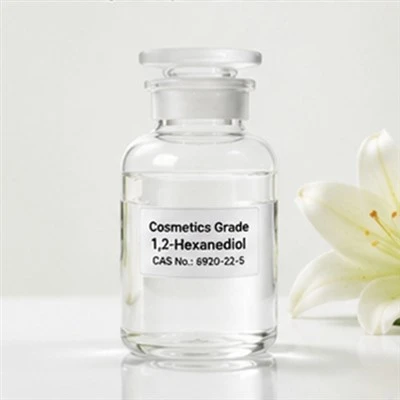
If you’re a bar owner, a restaurant manager, or another alcohol supplier who’s tired of messing up taxes and losing money, hit me up. We can walk through your specific market, break down what taxes you’re looking at, and figure out a way to make it work for your business. No jargon, no hidden fees—just real talk about what you need to know to stay compliant and keep your profits up.
Ethers REFERENCES
TTB, Alcohol and Tobacco Tax Guide
National Conference of State Legislatures, Alcohol Tax Policies
Tax Foundation, State Alcohol Excise Tax Rates
Qingdao Jinforest Chem Tech Co., Ltd.
Qingdao Jinforest Chem Tech Co., Ltd. is one of the most professional alcohols manufacturers and suppliers in China. With abundant experience, we warmly welcome you to wholesale high quality alcohols at competitive price from our factory. If you have any enquiry about quotation, please feel free to email us.
Address: Huangdao District, Qingdao City, Shandong Province (3002, Unit 1, Block B, No.226 Changjiang Middle Road, Former Development Zone)
E-mail: cecilia@kozorigin.com
WebSite: https://www.jinforestchem.com/
