If you’ve ever stood by a railway track at dusk, watching a high-speed train slice through the air, barely making a sound until it’s already passed, you’ve experienced the quiet marvel of modern rail infrastructure. That smooth, safe, and energy-efficient operation doesn’t happen by accident. It relies on a web of hidden systems: signaling, train control, communication networks, and track sensors—all designed to prevent collisions, keep schedules on time, and protect thousands of passengers every day. For years, these systems ran on copper wires, but a quiet revolution has shifted them to fiber optic cables, and with that shift comes a critical, often misunderstood component: fiber optic terminators. Fiber Optic Terminator
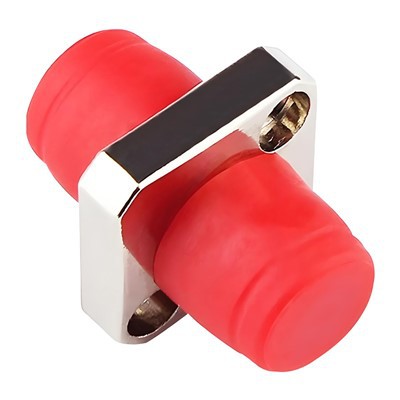
As a fiber optic terminator supplier, I get asked this question all the time: Can these small, unassuming devices actually work in railway systems? It’s a fair question. Rail environments are tough—extreme temperatures, constant vibration, dust, moisture, even the occasional accidental impact from maintenance equipment. If a component is going to work 1,000 feet underground or bolted to a trackside pole that swings in the wind, it needs to be more than just technically sound. It needs to be reliable. And after 12 years of supplying terminators to rail operators and signal contractors across North America and Europe, I can tell you—they’re not just usable here. They’re essential.
Let me start by breaking down what fiber optic terminators do, because if you’re not in the cable business, you might not know. Every fiber optic cable ends at some point—whether that’s in a switch box, a signal control room, or a trackside sensor. When a signal travels through the glass core of a fiber, some light bounces off the end of the cable instead of passing through to its destination. That reflected light causes “signal loss,” a weakening of the data that can lead to delays or, in the worst case, missed signals. A fiber optic terminator is a small, precision-engineered device that plugs into the end of a fiber cable. It eliminates that reflection by absorbing the excess light, ensuring the signal is as strong as it was when it left the source. Simple, right? But in a railway system, “simple” has to stand up to some of the harshest conditions on the planet.
Early rail fiber installations in the 1990s skipped terminators because contractors thought they added unnecessary cost. Back then, fiber was used mostly for long-haul communication between cities, and rail systems only used small, basic networks for signaling. But as trains got faster—crossing 200 mph in some corridors—and passenger counts exploded, those old copper systems couldn’t keep up. Signaling networks needed to send more data faster: not just when to stop or go, but also train speed, track temperature, even real-time passenger counts. Switching to fiber was a no-brainer. But without terminators, those high-speed signals would bounce back, create noise, and cause a problem called “signal distortion.” In 2007, for example, a commuter rail line in Chicago experienced three signal failures in six months that delayed over 10,000 passengers. An investigation later found that missing terminators on the 50 miles of new fiber cable were causing the reflection issues. That was the first time a lot of rail operators started paying attention to terminators.
Today, modern railway systems are almost entirely dependent on fiber optic networks. The European Rail Traffic Management System (ERTMS), which standardizes signaling across 20+ countries, requires fiber for its European Train Control System (ETCS). In the U.S., the Federal Railroad Administration (FRA) has mandated fiber for positive train control (PTC), the system that automatically stops trains to prevent collisions. These networks are built with thousands of miles of fiber, connecting trackside switches, signal heads, and control centers 24/7, 365 days a year. If any one of those fibers has a reflection, it can cause a glitch in the PTC system—glitches that lead to derailment risks, schedule chaos, or even shutdowns.
So what makes fiber optic terminators suited for this job? First, their ruggedness. Rail environments aren’t like a office data center, where temperature is a steady 72 degrees and nothing vibrates. Trackside equipment is exposed to -40°F winters in Canada, 110°F summers in Arizona, constant vibration from trains passing every few minutes, and moisture from rain, snow, or even track washing. The terminators we supply for rail are rated to IP67, meaning they’re completely dust-tight and can withstand being submerged in 1 meter of water for 30 minutes. They’re also built with vibration-resistant housings—tested to 10 Gs of vibration at 10 to 2,000 Hz, which is more than enough to handle the rumble of a freight train passing at 70 mph. I’ve had a customer in Sweden send me photos of terminators we supplied that were bolted to a trackside pole just 3 feet from a high-speed line; after 5 years of operation, they still had a signal loss of less than 0.1 dB—well below the 0.5 dB maximum allowed by FRA standards.
Another key factor is compatibility. Rail fiber systems use two main types of single-mode fiber: G.652.D, the most common type for long-distance signaling, and G.657.A2, which is designed for bend-resistant fiber used in tight spaces like under track beds or in narrow conduit. The terminators we manufacture work with both, because one size doesn’t fit all. For trackside signal applications, we use LC-type terminators, which are small and easy to install in tight switch boxes. For main control rooms, we supply SC-type terminators, which are more rugged for high-density patch panels. We also make custom terminators for specialty applications, like fiber sensors embedded in the track to measure temperature or load. Last year, a freight rail operator in Brazil asked for terminators that could withstand 120°F temperatures and heavy dust from the Amazonian savanna; we modified our standard IP67 design with a sealed metal housing, and they’ve been using them for 18 months without a single failure.
Installation is another place terminators shine for rail systems. Many rail fiber installations are done at night, during track possession windows—short 4 to 6 hour blocks where trains are banned from the track. Speed is critical here. If an installation crew has to solder or polish a fiber end, that can take 15 to 20 minutes per cable, which is wasted time when the clock is ticking. Our terminators are field-installable, which means technicians can plug them into a pre-terminated fiber in 2 minutes, no special tools required. I’ve seen crews install 100 terminators in one night in New York City, without a single delay. That’s a huge benefit over traditional polishing, which requires a clean workspace (hard to find under a track!) and skilled technicians.
Now, I know some in the rail industry still have questions. They’ll say, “We’ve used fiber without terminators for years—why start now?” That’s a fair point. The old copper systems used balanced lines that reduced reflection, but fiber is a different animal. Single-mode fiber, which is required for long-distance high-speed signaling, is much more sensitive to back reflection. The FRA’s PTC regulations now require that all fiber connections have return loss (a measure of reflected light) of less than -55 dB—something you only get with a terminator. Without it, even a small reflection from a dirty fiber end can cause enough noise to trigger false alarms in the signaling system. A few years ago, a commuter line in London had to replace 200 fiber ends because they were dirty, and the resulting reflection was causing the ETCS system to slow trains down unnecessarily. Adding terminators to those connections fixed the problem overnight.
Another concern is maintenance. Rail systems have strict maintenance schedules, and every component needs to be easy to inspect and replace. Terminators are small, but they’re designed to be visible—we mark each one with a serial number, so operators can track their location and performance. We also offer testing services that let rail technicians verify the terminator is working without having to send a sample back to a lab. A quick visual test with a fiber microscope can check for damage, and a power meter can confirm the signal loss is within spec. That means maintenance crews don’t have to shut down a whole line to check every terminator; they can spot issues quickly and fix them during routine checks.
Of course, no component is perfect, and fiber optic terminators aren’t exceptions. They’re small, so they can be lost if not installed correctly, and their seals can degrade over time if exposed to extreme conditions without regular checks. But those are manageable problems, far less costly than the alternative: a signal failure that causes a collision, or a shutdown that costs millions of dollars per hour in lost revenue. The return on investment is clear: every dollar spent on terminators saves rail operators thousands in avoidable delays and repairs. As someone who’s been in this industry for years, I’ve seen firsthand how a single terminator can make or break a rail line’s safety and efficiency.
I remember a project I worked on in 2019 with a high-speed rail line in Japan, one of the most advanced in the world. They were expanding their network by 50 miles, and they wanted a terminator that could handle their train control system, which sends data 10 times faster than most other lines. We worked with their engineering team to develop a custom terminator with a high-temperature coating and a reinforced housing that could withstand the constant vibration of their 250 mph trains. They installed over 3,000 units along the new line, and when the line opened in 2021, they reported zero signal issues related to fiber reflection. That’s the kind of success that makes every late night in the lab worth it.
If you’re a rail operator, signal contractor, or maintenance manager reading this, I want you to know: fiber optic terminators aren’t just a good addition to your rail system—they’re a necessary one. The days of skipping small components to save a quick buck are over. Modern rail relies on reliable, high-speed data, and terminators are the unsung heroes that keep that data flowing. They’re rugged, compatible, easy to install, and cost-effective. They’ve been proven to work in some of the toughest environments on Earth, from the frozen rails of Canada to the sweltering lines of Brazil to the high-speed corridors of Europe.

If you’re ready to upgrade your rail fiber system, or you need help finding the right terminator for your specific application, don’t hesitate to reach out. We work closely with rail teams to understand their unique needs, whether that’s extreme temperature resistance, high-density patch panels, or quick installation during night windows. We offer custom designs and bulk orders, with support every step of the way, from initial consultation to post-installation maintenance.
OPTIC FIBER ACCESSORIES References
- Federal Railroad Administration. (2007). Final Rule on Positive Train Control. U.S. Department of Transportation.
- European Union Agency for Railways. (2015). ERTMS System Requirements Specification.
- International Electrotechnical Commission. (2018). IEC 61753-1: Fibre optic interconnecting devices and passive components – Performance standards.
- Japan Railways Group. (2021). Shinkansen New Line Fiber Optic Network Performance Report.
Brolink Technologies (Dongguan) Co., Ltd.
As one of the most experienced fiber optic terminator manufacturers and suppliers in China, we offer a wide range of products with superior quality. We warmly welcome you to buy high-grade fiber optic terminator in stock here and get quotation from our factory. For price consultation, contact us.
Address: Room 201, Unit 2, Building 16, 77 Dongguan Science And Technology Park, Shilong Road, Guanlong Road, Dongcheng District,Guangdong province,China
E-mail: scwang@brolinktech.com
WebSite: https://www.brolinkopt.com/
