Hey there! If you’ve ever stood in a utility closet at 2 a.m. staring at a flaring breaker or had your home fridge die mid-dinner because of a wonky power blip, you already know how annoying voltage fluctuations can be. But have you ever stopped to wonder what’s actually happening inside that little metal box on your wall? As someone who’s spent the last 12 years supplying circuit breakers to small business owners, electricians, and even homeowners across the country, I’ve heard every question in the book about how these unsung heroes respond to the power that’s always shifting. Let me break it down like I do when I’m on the phone with a new electrician client—no jargon, just real-world stuff that matters when you’re counting on your power to work. Circuit Breakers
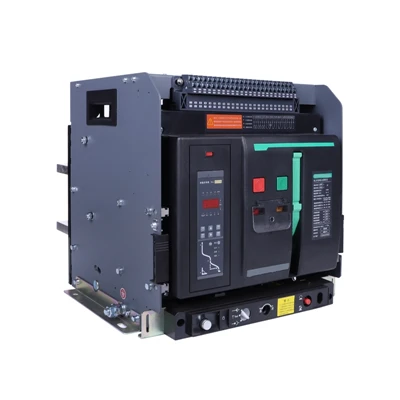
First off, let’s get clear on what “voltage fluctuations” actually are. Power grids aren’t some perfect, steady stream of electrons. On a hot summer afternoon when every neighborhood is running ACs at the same time, the voltage drops a little—we call that an undervoltage dip. Then, when a big factory or a local substation turns off a heavy piece of equipment, you might get a quick spike that makes your lights flicker bright for half a second, or even a full overvoltage surge. Those fluctuations might seem harmless at first: a flicker here, a dim light there, but over time, they’re like a slow leak in your house’s foundation. They can fry a $800 fridge compressor, mess up a home office’s server, or even cause a fire if they get bad enough. That’s where the circuit breaker comes in—it’s not just a switch that cuts power when something’s shorted; it’s your first line of defense against these quiet power problems.
Now, let’s talk about how the two most common types of circuit breakers respond to these fluctuations, because not all breakers are made the same—and that’s a mistake I see electricians make all the time. The first is the standard thermal-magnetic breaker, the kind you’ve got in almost every home built after the 1960s. These are simple, reliable, and they’ve been the workhorse of the electrical industry for decades. Here’s how they handle voltage dips and spikes: the thermal part is a bimetallic strip, two different metals stuck together that bend when heated by current. If there’s a sustained undervoltage, wait—no, wait, hold on. Current is what heats the strip, right? So if voltage drops but you’re still running a high-load appliance, like a space heater, the current might stay high enough to make the strip bend. Wait, no—let me correct that, because I’ve had to explain this to so many new contractors. If voltage is too low, your appliances actually pull more current to do the same work. A 1000-watt microwave that runs on 120 volts pulls about 8.3 amps, but if voltage drops to 100 volts, it pulls 10 amps to get the same 1000 watts. That extra amperage is what triggers the thermal trip. So a sustained undervoltage that makes your appliances overwork will make that bimetallic strip heat up, bend, and flip the breaker.
What about spikes? That’s where the magnetic part comes in. There’s a small electromagnet inside the thermal-magnetic breaker, wired in series with the circuit. It pulls a metal armature when the current surges. For regular overcurrent from a short circuit, that happens fast—like 0.02 seconds, which is why you don’t get a big flash when something goes wrong. But for voltage spikes, the current surges are usually shorter, right? Wait, no—let’s be honest here. Most lightning-related spikes or utility-switching surges are super fast, but their current can be thousands of amps. The magnetic trip is calibrated to trigger on those sudden, high-current surges, which is why thermal-magnetic breakers will trip for most temporary voltage spikes that could damage electronics. But here’s the catch: thermal-magnetic breakers aren’t great for really small, frequent spikes—like the ones you get every time you turn on a microwave or a AC. Those small spikes add up over time, and they can still wear out your devices. That’s why I always recommend GFCI breakers or AFCI breakers for homes with a lot of electronics, but wait—no, AFCI is for arcs, GFCI is for ground faults. The other type I’m talking about is the electronic circuit breaker, which is the second big category, and one that’s been growing in popularity for commercial and residential use over the last 10 years.
Electronic breakers, sometimes called solid-state breakers, use microchips and sensors instead of a bimetallic strip and an electromagnet. They’re more precise, and that’s a game-changer for voltage fluctuations. Here’s how they work: they monitor voltage and current 10,000 times a second—way faster than a human can blink. So if there’s a 5% voltage dip that lasts for a second, like what happens when a neighbor turns on a big appliance, the electronic breaker might not trip. But if that dip lasts for 10 seconds, or if there’s a 20% voltage spike, it’ll trip immediately. I remember a client last year who runs a small recording studio—their old thermal-magnetic breakers would trip every time they fired up the main mixing board, because the board draws a big current for a split second. We swapped them for solid-state breakers, and now the only time they trip is when there’s a real surge that could damage the $10,000 mixing equipment. That’s the precision you can’t get with thermal-magnetic, and it’s why a lot of businesses come to me when they’re tired of false trips or not enough protection.
Wait, let’s get into the really technical stuff that most suppliers don’t talk about, because it’s what makes a breaker actually work when you need it. When a voltage fluctuation hits, the breaker’s response has three stages: detection, decision, and trip. Detection is how fast the breaker picks up the change. Thermal-magnetic breakers take about 0.01 seconds to detect a big surge, but up to 10 seconds to detect a sustained overcurrent from an undervoltage. Solid-state breakers can detect a change in less than a millisecond, which is why they’re better for sensitive gear. Then there’s the decision stage: the breaker’s built-in settings, called trip curves, that determine when it trips. For voltage fluctuations, there are different trip curves for different applications. A Type B trip curve is for residential circuits, tripping at 3-5 times the rated current, which handles small spikes. A Type C is for commercial, tripping at 5-10 times, and Type D is for heavy industrial equipment, tripping at 10-20 times. That’s why matching the breaker’s trip curve to your load is so important—you don’t want a residential Type B breaker tripping every time you run a workshop saw, and you don’t want an industrial Type D breaker that won’t trip when your home has a dangerous surge.
I’ve seen so many mistakes here, especially from homeowners who go to the hardware store and grab the cheapest breaker they can find. Let me tell you: not all breakers are tested to the same standards. A lot of generic breakers online or at big box stores cut corners on the calibration of the thermal and magnetic trips. I had an electrician client come to me last year after he replaced a few old breakers in a small retail shop with cheap ones he ordered off Amazon. Within two weeks, two of the new breakers had tripped during a minor voltage spike that the old ones would have handled. When he tested them, the magnetic trip was calibrated to trigger at twice the rated current instead of five times—so it was way too sensitive, causing false trips, or sometimes not sensitive enough during a real surge. That’s why as a supplier, we only carry breakers that are UL-listed (or IEC-listed for international clients) and tested to meet strict standards for voltage fluctuation response. It’s not about overcharging— it’s about making sure that when your power does something weird, the breaker works like it’s supposed to.
Let’s talk about real-world examples, because that’s what matters. Last winter, a bad ice storm took out a local power line for two hours. When the power came back on, there was a huge inrush current because all the neighbors’ heaters and freezers kicked on at the same time. One house had old thermal-magnetic breakers, and three of them tripped, cutting power to the garage. The homeowner had a new air compressor in the garage that would have been fried if the breaker didn’t trip, but because it was a old, overrated breaker, it took a second too long to respond. Another house down the street had solid-state breakers, and none of them tripped—they handled the inrush current just fine, and the homeowner didn’t even notice the blip. That’s the difference that choosing the right breaker makes.
Another example: a small restaurant I supply breakers to downtown. They have a walk-in fridge, a commercial oven, and a bunch of refrigerated display cases. On a busy Saturday night, when all those appliances run at the same time, there’s often a small voltage dip. Their old thermal-magnetic breakers would trip once a month, usually around 8 p.m. when the dining room is packed, costing them hundreds of dollars in spoiled food and lost revenue. We swapped them for solid-state breakers calibrated for their commercial load, and they haven’t had a trip in over a year. The breaker sees the small, sustained dip, but knows it’s normal for their load, so it doesn’t trip. Only when there’s a dip big enough to damage the fridge compressors does it trigger. That’s the balance you need between protection and reliability, and it starts with how the breaker responds to voltage fluctuations.
Now, let’s clear up a common myth: circuit breakers don’t just “sense” voltage directly. Wait, is that true? A lot of people think breakers measure voltage, but most standard thermal-magnetic breakers measure current. The only breakers that measure voltage are electronic ones, because they need to adjust their trip settings based on voltage changes. That’s why a thermal-magnetic breaker will trip for an undervoltage, but it’s actually reacting to the higher current that the undervoltage causes in the appliances. If you have a device that doesn’t draw more current when voltage drops—like a low-power LED light—the thermal-magnetic breaker might not trip, even if the voltage is super low, because there’s no extra current. That’s why you might notice your lights dim but your breaker doesn’t flip—because the load isn’t drawing extra amps. That myth has caused so many arguments with electricians over the years, so it’s good to set the record straight.
So what should you be looking for when you’re choosing breakers for your home or business? First, know your load. If you’re a homeowner with standard appliances, thermal-magnetic breakers are usually enough, but make sure they’re UL-listed and matched to your circuit’s amperage. If you have sensitive electronics—like a home office with servers, a recording studio, or medical equipment—go for solid-state breakers, because their precise response to voltage fluctuations will prevent damage and false trips. Second, talk to a professional electrician. I’ve had so many people come to me with a list of breakers they want to buy, because they read something online, and it’s always a mistake. Electricians know your local power grid’s quirks—some areas have more frequent spikes, some have more dips—and they can recommend the right trip curve and breaker type for your specific situation.
Here’s the thing I always tell new clients: circuit breakers are the unsung part of your electrical system. You don’t think about them until they trip, and then you get mad. But when they work right, they keep your family safe, your business running, and your expensive gear from getting fried. Understanding how they respond to voltage fluctuations isn’t just a technical thing—it’s about making sure you’re protected without dealing with constant outages.
If you’re tired of dealing with false trips, or you’re worried about a recent spate of power blips damaging your equipment, I’d be happy to help. As a circuit breaker supplier, I’ve spent years working with electricians and homeowners to find the right solution for their needs—no pushy sales, no overpriced generic parts, just honest advice about what will work for your home or business. We supply a full range of thermal-magnetic, solid-state, and AFCI/GFCI breakers, all tested to meet strict safety standards, so you can trust that they’ll respond the way they’re supposed to when a voltage fluctuation hits. Whether you’re rewiring your home, upgrading your commercial space, or just need to replace a few old breakers, reach out and we can talk through your needs.
At the end of the day, voltage fluctuations aren’t going anywhere. The power grid will always have dips and spikes, whether you live in a small town or a big city. The best defense is a good circuit breaker that’s calibrated to handle those changes. Don’t wait until you’re dealing with a spoiled fridge or a fire hazard to upgrade your breakers—let’s connect and make sure your electrical system is protected.
Cable Lug References
National Electrical Code (NEC) Article 240: Overcurrent Protection
Underwriters Laboratories (UL) Standard 489: Molded-Case Circuit Breakers, Molded-Case Switches, and Circuit-Breaker Enclosures
IEC 60947-2: Low-voltage switchgear and controlgear – Part 2: Circuit breakers
Wenzhou Lanen Electrical Co., Ltd.
Wenzhou Lanen Electrical Co., Ltd. is one of the most professional circuit breakers manufacturers and suppliers in China, also supports customized service with low price. Please feel free to buy CE approved circuit breakers made in China here from our factory. Contact us for more discount information.
Address: Zhiguang Liushi Town Yueqing City Wenzhou City Zhejiang Province
E-mail: lanen@luyele.cn
WebSite: https://www.lanenelectrical.com/
