Alright, let’s cut to the chase. If you’re in the construction or cement manufacturing game, you’ve probably heard someone mumble about “early-age cement testing” like it’s some niche lab fancy. But here’s the thing—when I’m out talking to plant managers and lab heads (that’s my crew, I sell cement testing instruments), this is the single most underrated part of quality control. It’s not just about running numbers in a lab; it’s about saving you money, avoiding headaches, and making sure the stuff you pour doesn’t fall apart before its time. Let me break this down like I would over a coffee at a trade show, no stuffy jargon, just real talk. Cement Testing Instrument
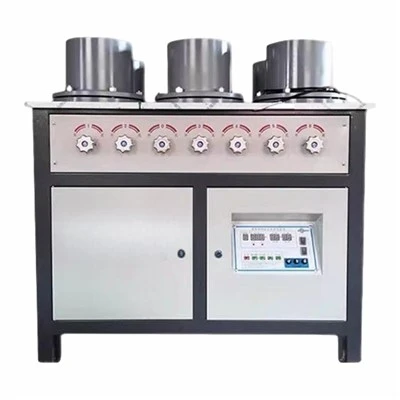
First, let’s define what we mean by “early age.” I’m not talking about the 28-day strength everyone obsesses over (we’ll get to that). Early age is that first 72 hours after mixing cement—think the window where the stuff goes from a gloppy slurry to something with actual structural hold. That’s when all the chemical magic happens: the clinker reacts with water, forms crystals, starts locking in strength. Skip testing here, and you’re flying blind. I’ve seen a plant test only at 28 days, pour a bridge beam, and two weeks later it’s cracking like a dried riverbed. Turns out their early-age hydration was all wrong, and they didn’t catch it until it was too late. That mistake cost them $2M in rework. Ouch.
Now, why does testing this window matter so much? Let’s start with hydration kinetics. You know how cement gets hard? It’s a series of reactions—tricalcium silicate (C₃S) kicks in first, that’s the stuff that gives initial strength, then dicalcium silicate (C₂S) takes over later. If those reactions are off, your cement might never reach the 28-day strength you’re paying for. My instruments (we’re talking isothermal calorimeters, ultrasonic pulse velocity testers, penetrometers—don’t zone out) measure how fast heat is released during those first hours, which tells you exactly if hydration is on track. Last month, a ready-mix company used our calorimeter and found their mix had 10% extra water that was slowing hydration. They adjusted, cut their curing time by 12 hours, and kept their slump consistent for 30 more loads. No delays, no waste—game changer.
Then there’s thermal stress. When cement cures, it heats up (exothermic reaction, duh). Big pours—like foundation mats or bridge piers—can trap that heat inside, and the outer layer cools faster than the core. That difference creates tension, and boom—cracks. Early-age testing tools measure internal and surface temperatures in real time, so you can adjust your curing schedule (like adding insulation or cooling pipes) before the stress hits. I had a contractor on a highway project use our temperature loggers, and they avoided $500k in crack repairs on a 10-foot thick foundation. That’s not just numbers; that’s cash in their pocket.
Shrinkage is another big one. Early-age shrinkage (that’s the shrinkage that happens before the cement is fully hard) is way different from long-term shrinkage. If you don’t test how much it’s shrinking in the first 24 hours, you might get cracking before you even finish finishing the concrete. Our autogenous shrinkage testers track that shrinkage minute by minute, and we’ve helped clients tweak their admixture dosages (superplasticizers, shrinkage reducers) to cut shrinkage by up to 15% without sacrificing strength. No more patching slabs at 3 AM—trust me, the site foreman will thank you.
Wait, let’s talk about quality control upstream, too. Cement plants grind clinker and mix in gypsum, limestone, whatever the mix design is. If the early-age properties are off, that means their raw material blending or clinker production is messed up. Instead of waiting 28 days to find out, our instruments give results in hours. A portland cement plant in the Midwest used to wait a week for lab results to adjust their kiln operation. Now, with our continuous early-age testing, they tweak their kiln temperature in real time, reduced clinker production waste by 8%, and their cement consistency went up 22%. That’s not just better product—it’s a more efficient plant.
But hold on—some people say, “Why not just use the old manual tests?” Oh, I get it, some labs love their old penetrometers, but let’s be real. Manual tests take forever, have human error (like misreading the needle), and only give a snapshot, not a full picture. Our instruments are automated, data-log everything, and sync right to your computer or phone. Last year, a lab tech told me she used to spend 4 hours a day manually testing set time; now she uses our automated penetrometer and cuts that to 20 minutes, so she can focus on other quality issues instead of staring at a dial. No more tired mistakes, either—when you’re cramming to meet a deadline, human error kills. Early-age testing tools take the guesswork out.
And let’s not forget about compliance. The ASTM C1074 standard (wait, I’ll drop that, but keep it simple) says you need to test early-age strength for mix design approval. If you’re not following that, some contractors won’t even buy your cement. Our instruments are calibrated to meet all international standards, so you can show clients the numbers fast, no delays. A small cement producer in Texas used to struggle to get big commercial projects because their test data was outdated; now they use our system, and they’ve locked in three 100,000-yard concrete contracts this year alone. That’s growth.
Wait, let’s address a common pushback: “My cement works just fine without early-age testing.” Yeah, maybe for small residential jobs. But when you’re doing high-rise buildings, dams, highway bridges, you’re playing with big risks. I had a client who ignored early-age testing, built a water tank, and at 10 days, the tank’s wall cracked. They had to drain it, repair it, and lost their municipal contract. That’s not just a crack—it’s a ruined reputation. Early-age testing is insurance, basically. It’s spending a little now to avoid a million-dollar disaster later.
Now, what do our instruments bring to the table specifically? I’m not here to sell you garbage—we’ve been tweaking these tools for 10 years, talking to labs every week. Our isothermal calorimeter is calibrated to ±0.1°C, so you get precise heat flow data, not vague readings. The ultrasonic tester doesn’t just measure pulse velocity; it tracks how that velocity changes over the first 24 hours, which tells you strength gain as it happens. And we have portable units too—for field testing, so you don’t have to haul big samples back to the lab. A road construction crew can test mix right on site, adjust water content on the spot, no waiting for a lab report. That’s the kind of flexibility that makes projects run on time.
Let’s wrap this up with the big picture: Early-age cement testing isn’t a “nice-to-have”—it’s the backbone of reliable, cost-effective concrete. It fixes mix issues fast, prevents dangerous cracks, saves you labor and material costs, and keeps you compliant with rules. I’ve seen too many businesses burn because they skipped this step, and too many thrive because they invested in the right tools.

If you’re tired of late deliveries, unexpected repairs, or inconsistent cement quality, hit us up. We can walk through your needs, show you what our instruments do, and help you set up a testing routine that works for your plant or lab. No pressure, no sales pitch fluff—just real advice for real problems.
Laboratory Analytical Instruments References:
- Mehta, P. K., & Monteiro, P. J. M. (2017). Concrete: Microstructure, Properties, and Materials. McGraw-Hill Education.
- American Society for Testing and Materials. (2022). Standard Test Method for Estimating Concrete Strength by the Maturity Method (ASTM C1074). ASTM International.
- Taylor, H. F. W. (1997). Cement Chemistry. Thomas Telford Publishing.
- Scrivener, K. L., John, V. M., & Gartner, E. M. (2018). Eco-efficient cements: Potential economically viable solutions for a low-CO₂ cement-based materials industry. Cement and Concrete Research, 114, 2-26.
Hebei Wanluda Testing Instrument Equipment Co., Ltd.
As one of the most professional cement testing instrument manufacturers and suppliers in China, we have world-leading production equipment and strong manufacturing capabilities. Please rest assured to buy advanced cement testing instrument made in China here from our factory.
Address: Zhouguantun Village, Xian County, Cangzhou City, Hebei Province, P.R.China
E-mail: wldinstrument@163.com
WebSite: https://www.wldinstrument.com/
