If you’ve ever stepped onto a manufacturing floor, you know injection molding machines (IMMs) are the workhorses of modern production—churning out everything from toy parts to medical device components at scale. But if you’re like many plant managers I talk to, you also know those machines are major energy hogs. Over the 20 years I’ve worked as an IMM supplier, I’ve visited hundreds of factories where 30-50% of their total electricity bill goes to these workhorses. The good news? Cutting that energy waste isn’t just about cranking a few settings or swapping old parts. It’s a mix of smart upgrades, process tweaks, and regular care—stuff that’s worked for my customers, and stuff I’ve helped them implement time and again. Let’s break down what actually works, no fluff, no jargon that doesn’t mean something on the floor. Injection Molding Machine
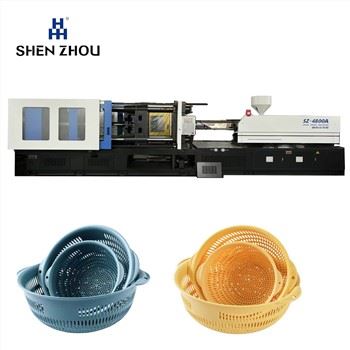
First, let’s talk about the biggest energy drain on almost every IMM: the hydraulic system. For decades, most machines ran on constant-volume hydraulic pumps—meaning they push the same amount of oil 24/7, even when the machine isn’t injecting or cooling parts. That’s like leaving your car’s engine running at full speed while you wait at a red light. Back when I sold my first IMMs in the early 2000s, that’s all we had. Today, variable-speed drives (VSDs) changed everything. A VSD adjusts the pump’s speed to match what the machine is actually doing—if it’s holding pressure during cooling, the pump slows way down instead of pushing full oil. I had a customer in Ohio making plastic kitchen utensils who upgraded their 250-ton IMM from a constant-volume pump to a VSD system three years ago. Their energy bill for that one machine dropped 38% in the first quarter, and they’ve saved over $12,000 a year since. The catch? You have to pick a VSD matched to your machine’s hydraulic load, not just the biggest one you can find. I’ve seen customers blow money on over-sized VSDs that don’t deliver the same savings, so I always work with them to calculate their actual cycle times and pressure needs first.
Another hydraulic upgrade a lot of plants overlook is replacing older pump models with energy-efficient servo pumps. Wait, I know what you’re thinking—you’ve heard “servo” thrown around as a buzzword. But here’s the real deal: servo pumps use a motor that only activates when the machine needs oil, not running non-stop. They can adjust pressure and speed in milliseconds, which makes them way more efficient than even basic VSDs for machines that run short, fast cycles—like packaging parts or small electronics. A customer in Texas making phone cases swapped four of their older IMMs for servo-driven models last year, and their total plant energy use went down 17%. The upfront cost is higher than VSDs, but for high-cycle, 24/7 operations, the ROI is often less than 18 months. I usually don’t push servo pumps on plants that only run 8-hour shifts, though—VSDs are a better, cheaper fit for lower utilization.
Now, let’s move to process adjustments, because even the best pump on the machine is wasted if your process is inefficient. The biggest win here is optimizing cycle times, specifically cooling time. Cooling is usually 60-70% of the total cycle for most IMM operations. If you’re leaving parts in the mold an extra 5 seconds “just to be safe,” that’s 5 seconds the machine’s pump is running, 5 seconds of energy wasted every single part. I had a customer in Indiana making automotive trim parts who tested cooling times: they started with 12 seconds per cycle, and their quality team said parts were slightly warped. They tweaked the mold water temperature (more on that in a sec) and adjusted injection pressure, and got the part down to 9 seconds without a single defect. That’s a 25% reduction in cycle time, which for a machine running 2,000 cycles a day, cuts energy use by 22%—no new parts, just a better process. Another tweak: lower melt temperatures whenever possible. A lot of operators crank melt temps to speed up flow, but excess melt heat means you have to spend more energy cooling the part later. I work with all my customers to do a “melt temp trial” where we lower temps by 5 degrees at a time, checking for defects, until we hit the lowest possible temp for their material. It’s small, but it adds up.
Mold and barrel upgrades are another area I see underused. Let’s start with mold insulation. If your mold is losing heat (for hot halves) or gaining heat (for cold halves), the machine has to work harder to maintain consistent temperatures. I recently worked with a customer in Michigan making plastic pallets who wrapped their mold in high-temperature insulation. They weren’t even trying to save energy at first—they were fixing a temperature inconsistency that was causing part defects. But after the wrap, their machine’s barrel heater energy use dropped 14% because the mold didn’t pull as much heat from the barrel. For barrel upgrades, if you have an older machine with standard barrel heaters, swapping them for band heaters that have reflective foil covers cuts heat loss by up to 20%. Some newer models even have ceramic heaters, which are more efficient than steel ones because they don’t radiate as much heat into the machine frame. I’ve had half a dozen customers switch those out, and none have gone back to standard heaters.
Don’t sleep on the mold cooling system itself. A lot of plants run cooling water at a fixed temperature, but if you adjust the water temperature and flow rate to match the part’s needs, you can cut both cooling time and energy for the chiller or cooling tower. For example, a thick part needs colder water to solidify fast, but a thin part might do fine with 2-3 degrees warmer water. I had a customer in North Carolina making bottle caps who used to run their chiller at 12 degrees Celsius all year. We adjusted it to 14 degrees in the summer (when ambient temps were higher) and 15 in the winter, and their chiller’s energy use dropped 21% because it didn’t have to work as hard to keep water cold. If your plant uses a cooling tower instead of a chiller, cleaning the tower’s fill media annually keeps it operating at peak efficiency—clogged fill makes the tower use 15-25% more energy, which I learned the hard way when a customer called me complaining about sky-high bills, and we found their tower hadn’t been cleaned in 3 years.
Next up is idle time management—this is the easiest, most overlooked way to cut energy waste. I’ve walked into plants where IMMs are left running at full power during lunch breaks, overnight, or on weekends when they’re not running. That’s like leaving your office lights on all weekend. The fix is simple: set machines to go into low-power mode during idle periods. Most newer IMMs have this feature, but a lot of operators don’t use it because they think it takes too long to re-start. But with today’s technology, re-starting from low-power mode takes 1-2 minutes, compared to 5-10 minutes for a full cold start. A customer in Georgia that makes plastic toys did a simple test: they left one machine running at full power over a weekend, and another in low-power mode. The low-power machine used 92% less energy over the weekend. Another win: stagger machine start times at the beginning of shifts. If you fire up 10 machines at 7 a.m. all at once, that puts a big load on your plant’s electrical system, and utilities often charge a demand fee for that peak load. If you start them one at a time over 30 minutes, you cut that peak load by 25-30%, which can save thousands a year on utility bills. I always remind customers to check their utility contracts for demand charges—they’re a hidden cost most plant managers don’t even know they’re paying.
Regular maintenance is non-negotiable, too. A machine with dirty filters, worn hydraulic hoses, or uncalibrated pressure sensors uses way more energy than a well-maintained one. I had a customer in Pennsylvania making medical device parts who was shocked when their energy use went up 10% in 6 months. We did a full maintenance check and found their hydraulic filter was 90% clogged, so the pump had to work twice as hard to push oil. Replacing the filter brought energy use back down immediately. Other things to check: hydraulic fluid levels (low levels cause the pump to work harder), mold alignment (misaligned molds increase friction, which means more energy to move the platens), and platen lubrication (dry or sticky platens waste energy on movement). I tell all my customers that a $100 filter replacement is way cheaper than the extra energy costs from a clogged one. And don’t forget about electrical components: loose wiring or corroded connections can cause power loss, which makes the machine use more electricity to get the same power. I once had a customer who spent $5,000 on unnecessary machine repairs before we checked their wiring—they just had a loose ground connection that was causing power to leak, and tightening it cut energy use by 8%.
Wait, I should mention that not all upgrades work for every machine. If you have a machine older than 15 years, sometimes retrofitting a new pump or VSD makes sense, but other times it’s better to just replace the whole machine. The average lifespan of an IMM is 20-25 years, but newer models use 30-50% less energy than 10-year-old ones. I had a customer in California who was trying to keep a 20-year-old machine running because of the cost of new molds. We did a cost analysis: retrofitting the old machine with a VSD would cost $18,000, and they’d save $4,500 a year. A new comparable machine would cost $75,000, but save $12,000 a year, with a 6-year ROI. They ended up buying the new machine, and in the first year, the energy savings covered half the cost difference between retrofitting and replacing. The key is to do a simple ROI calculation, not just go with the cheapest option.
Another small win: LED lighting. A lot of plants still use fluorescent lights on their machines, which use way more energy than LEDs. Swapping all machine and floor lights to LED cuts lighting energy use by 50-75%, and since LEDs last 10 times longer, you save on replacement costs too. I had a small customer in Illinois with 3 IMMs, who swapped all their lights for LEDs for $1,200, and now saves $600 a year on lighting—ROI in 2 years. It’s not a huge number, but when you add it up with the other savings, it adds up fast.
Let me be clear: there’s no “one-size-fits-all” fix here. What works for a 500-ton machine making pallets won’t work for a 50-ton machine making tiny medical parts. That’s why I spend time with every customer to walk their floor, watch their machines run, and figure out where their specific waste is. The worst thing you can do is install a bunch of upgrades that don’t fit your operation—they’ll just waste money. I’ve seen customers spend $50,000 on servo pumps for machines that only run 8 hours a day, and only save $2,000 a year. That’s not a win.
If you’re ready to cut your IMM energy bills, start small. Pick one machine, do a quick audit: check its cycle times, hydraulic pump type, idle time, and maintenance history. Test one tweak first—like lowering melt temp by 5 degrees or setting it to low power during lunch. You’ll be surprised how much you can save with small changes before investing in big upgrades.

At the end of the day, reducing energy use for injection molding isn’t just good for your bottom line—it’s good for the environment too. I’ve been doing this long enough to know that when you save energy, you’re not just saving money; you’re reducing waste, making your operation more efficient, and that makes your parts more competitive in the long run. If you’re ready to talk about what makes sense for your specific machines and operation, I’m here to help. We can walk through your current setup, talk about upgrades, process tweaks, or maintenance plans that will cut your energy bills without hurting your production or quality. Don’t wait—even a small change today can add up to thousands in savings by the end of the year.
Auxiliary Machinery References:
- International Energy Agency. (2022). Energy Efficiency in Manufacturing: Sector Trends and Insights. IEA Publications.
- American Chemistry Council. (2021). Injection Molding Energy Savings Best Practices. ACC Sustainable Production Committee.
- Manufacturing Extension Partnership. (2020). Reducing Energy Use in Plastic Processing Operations. NIST.
- Plastics Industry Association. (2022). IMM Efficiency Retrofit Guide for Small and Medium Manufacturers. PIA Technical Services.
- Energy Star. (2021. Industrial Equipment: Injection Molding Machines). US Environmental Protection Agency.
Shenzhou Machinery Co., Ltd.
As one of the most professional injection molding machine manufacturers and suppliers in China, we’re featured by quality products and good price. Please feel free to buy advanced injection molding machine made in China here from our factory. We also accept customized orders.
Address: Fenghuang Town, Zhangjiagang City, Jiangsu Province, P.R.China
E-mail: sale@shenzhoumac.com
WebSite: https://www.shen-zhoumachinery.com/
