As a car body kit supplier who’s worked with thousands of car owners from weekend track enthusiasts to daily commuters, I’ve heard every version of this question: “How do I pick the right kit for my ride?” It’s not just about slapping a set of bumpers or side skirts on your car, either. I’ve seen someone drop a $1,500 carbon fiber kit on a 2012 Honda Civic only to have it fall off on the highway because they skipped basic fit checks, and I’ve guided a 2021 Ford F-150 owner to a budget-friendly polyurethane kit that’s lasted three years through off-roading and rainstorms. The right body kit doesn’t just change your car’s looks—it fits your car, your driving habits, and your budget, without turning a $30k investment into a roadside hassle. Let’s break this down step by step, no jargon, no sales pitches, just the lessons I’ve learned handing kits to customers over the last seven years. Car Body Kit

First, start with your car’s core identity. That sounds fancy, but it’s simpler than it is. Your car isn’t just a chassis with wheels—it’s built for a specific job. A rear-wheel-drive sports car like a BMW M2 or Mazda MX-5 is meant for cornering and responsive handling, so a body kit here should reinforce that: lightweight materials, low-profile air dams to redirect airflow away from the radiator and brakes, and side skirts that reduce undercarriage lift at speed. If you put a bulky, tall body kit on a Miata, you’ll add unnecessary weight and raise the center of gravity, which will kill the car’s signature zippy feel. On the flip side, a daily driver like a Toyota Camry or Honda Accord doesn’t need track-focused aero. Its job is to get you to work without breaking down, so a subtle body kit that adds a small rear spoiler (to cut through highway drag) and smooth side skirts (to keep road spray off your doors) is way better than a wide-body kit that makes parallel parking impossible. Even trucks and SUVs have their own identity: a Ford Bronco built for trail rides needs durable, impact-resistant body kits with flared fenders to fit oversized tires, while a Honda CR-V used for school runs should have a kit that doesn’t get damaged by parking lot scrapes. I had a customer last year who bought a wide-body kit for his CR-V because he thought it looked “aggressive”—three weeks later, he was back, saying he’d ripped the fender flare on a parking stop and the replacement cost more than the kit itself. That’s the kind of mistake we’re here to avoid.
Next, fitment is non-negotiable. I can’t stress this enough: a body kit that fits poorly isn’t just ugly—it’s dangerous. Years ago, we had a customer bring in a kit for his Subaru WRX that was “custom made” by a third-party seller online. The front bumper stuck out two inches past the factory fenders, the side skirts didn’t line up with the rocker panels, and the rear diffuser hit the ground when he took his car to a car wash. When he tried to drive to a track day, the loose bumper bracket broke at 60 mph, and the whole piece almost hit a car behind him. Fitment starts with checking two things: compatibility with your exact car model and year, and the kit’s manufacturing process. Reputable kits (the ones we supply) are either OEM-style molds, which take direct impressions of your specific car’s body panels, or precision CNC-machined parts that match factory tolerances. Cheap kits are often “one-size-fits-most” molds that have to be cut, sanded, and modified to fit, which leaves gaps, misalignments, and weak spots. For example, a 2018 Honda Civic Si sedan won’t have the same door gaps as a 2020 Civic Si coupe, so a kit made for the coupe won’t line up on the sedan. I always tell customers to ask for sample fit checks before buying, if possible, or to look for reviews from other owners of the exact same car. Another trick: measure your car’s wheelbase and track width (distance between the front wheels) and compare it to the kit’s specs. If your wheelbase is 106 inches and the kit is designed for a 102-inch wheelbase, it’s going to sit wrong, no matter what the seller says.
Then, choose the right material for your needs. This is where a lot of customers get confused, and it’s the biggest factor in how long your kit lasts, how much it costs, and how it performs. Let’s cut through the marketing hype: there are three main materials for body kits, each with pros and cons. First, polyurethane (PU) is the most common for daily drivers and budget builds. It’s flexible, so it bends instead of cracking if you hit a parking stop or a curb—we’ve had PU kits last 5+ years on cars that get daily abuse, and they’re easy to repair if they do get damaged. The downside is it’s heavier than carbon fiber, and it can fade or discolor if it’s not properly coated to resist UV rays. Second, fiberglass (FRP) is the go-to for track cars and show builds. It’s lightweight, stiff, and affordable compared to carbon fiber, which makes it great for reducing a car’s weight for better performance. But it’s brittle—hit it hard, and it shatters, and repairing it takes special skills (not just a quick dab of bondo). Third, carbon fiber is the premium option for performance and style. It’s super lightweight (half the weight of fiberglass), incredibly strong, and it has that glossy, woven look that turns heads. The downsides? It’s expensive—often twice the cost of fiberglass or PU—and it’s also brittle; if you crack a carbon fiber panel, repairing it is way more expensive than fiberglass. Plus, it’s not ideal for daily drivers who deal with parking lot scrapes, because even a small impact can leave a permanent crack. I once sold a carbon fiber hood to a track customer, and he drove to and from the track, and it lasted two years. Another customer used it as his daily driver, and he hit a deer, and the whole hood had to be replaced—cost him $1,200 for a new one, which he didn’t budget for. So, ask yourself: Am I building a track car that’s only driven on weekends, or a daily driver that’s navigating tight city streets? If it’s the latter, PU is almost always the best bet. If it’s a weekend track car, fiberglass or carbon fiber works, but factor in repair costs.
Don’t forget to think about local regulations and practicality. This is a step many people skip, and it can lead to a huge headache—like getting a ticket for modifying your car beyond what’s legal. Every state, province, and country has different rules about body kit modifications. In some places, wide-body kits that change the car’s width by more than a few inches are illegal for street use. Other places have rules about how low your car can sit (if your kit lowers the car too much, you might not pass an emissions test). Even something as simple as a rear spoiler: some areas require the spoiler to be no taller than a certain height, otherwise you can get pulled over. I had a customer in California who installed a 6-inch rear spoiler on his Mazda 3, and he got a $200 ticket within a week, because California’s emissions laws limit rear spoilers to a maximum height of 4 inches. Also, think about practical use: do you regularly carry large items? A body kit that lowers the rear bumper too much will make it hard to load a bike or a cooler. Do you live in a snowy area? A low front air dam will catch snow and slush, leading to ice buildup that can damage the bumper. Last winter, a customer in Minnesota bought a low-profile front kit for his Subaru Impreza, and by February, the air dam was completely covered in ice, and the brackets had pulled loose from the frame. We ended up modifying the kit with a 1-inch lift to clear snow, which fixed the problem. So, check your local DMV’s guidelines, and think about how your kit will work with your daily life, not just your Instagram feed.
Budget is the final, most real-world factor. I wish I could say the most expensive kit is the best, but that’s not true. A $500 polyurethane kit that fits perfectly and works for your daily driver is way better than a $3,000 carbon fiber kit that’s too stiff, too narrow, and doesn’t fit your car. Set a realistic budget, and break it down: don’t just look at the kit itself—add in paint, installation, and any possible repairs. Paint is a big one: most body kits come primer-only, so you have to pay to get them painted to match your car. That can add $300-$800 to the total cost, depending on the car’s paint type (metallic paint is more expensive than solid, for example). Installation is another: if you’re not comfortable working on cars, you’ll need a mechanic or a body shop to fit the kit, which can add $200-$1,000, depending on how complex the kit is. For a basic side skirt kit, installation is quick, but a wide-body kit that requires modifying the fenders will take more time and cost more. I always tell customers to allocate 20-30% of their budget for paint and installation, so they don’t get sticker shock when the kit arrives. If your total budget is $1,000, a kit that costs $700 leaves $200 for paint and $100 for installation, which is a solid plan. If you blow your whole budget on the kit, you’ll end up with a primed, unmodified piece in your garage, which is a waste of money.
Now, let’s wrap this up with a quick recap: start with your car’s identity (daily driver vs track car, truck vs sedan), prioritize fitment over aesthetics, pick a material that matches your driving habits (flexible PU for daily, stiff fiberglass for track), check local regulations, and set a budget that includes paint and installation. At the end of the day, the best body kit is one that makes your car feel like yours, without causing you stress, money, or safety issues.
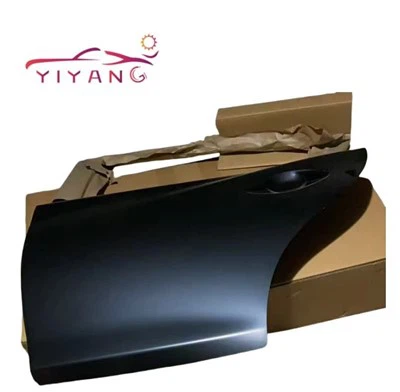
If you’re ready to browse kits that fit your specific car, or have questions about fit, material, or installation, I’m here to help. Reach out to start a conversation about your build, no pressure, no hard sells. I’ve worked with every type of build from first-time kit buyers to seasoned tuners, and I can help you find the right fit for your car, your budget, and your needs.
Infiniti Car Hood References
- Society of Automotive Engineers (SAE) International. (2022). Performance Standards for Automotive Body Panel Fitment.
- Automotive Aftermarket Suppliers Association (AASA). (2023). Body Kit Material Durability and Application Guidelines.
- National Highway Traffic Safety Administration (NHTSA). (2021). Vehicle Modification Regulations and Safety Standards for Light-Duty Vehicles.
- Tire Industry Association (TIA). (2022). Compatibility Guidelines for Wide-Body Kits and Wheel-Tire Combinations.
Hangzhou Yiyang Auto Parts Co., Ltd.
Established in 1999, Hangzhou Yiyang Auto Parts Co., Ltd. is one of the most experienced car body kit manufacturers and suppliers in China. Please rest assured to buy high quality car body kit at low price from our factory. If you have any enquiry about pricelist and quotation, please feel free to email us.
Address: 1102, Block A, Jintong International Building, Gongshu District, Hangzhou, Zhejiang Province
E-mail: Yuki1464801745@163.com
WebSite: https://www.yiyangautoparts.com/
