If you’ve ever worked on automotive wiring, medical device assembly, or consumer electronics manufacturing, you’ve probably run into flat twisted cables—those thin, flexible, ribbon-like wires twisted in a flat profile that save space and reduce electromagnetic interference (EMI) better than standard round cables. Over the years, I’ve had hundreds of customers ask me the same question: “Are flat twisted cables available in different thicknesses?” It’s a fair ask, because thickness directly impacts flexibility, bend radius, current capacity, and where you can actually use these cables. As a flat twisted cable supplier with 12 years in the game, I’m here to break this down, share what we offer, and clear up the confusion around thickness for this specific cable type. Flat Twisted Cable
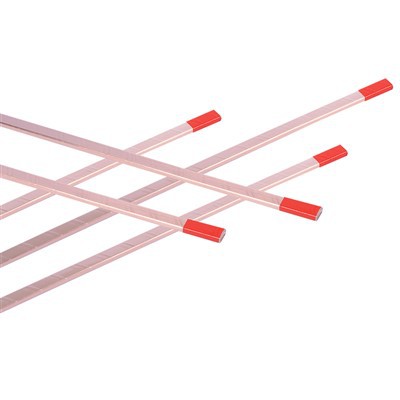
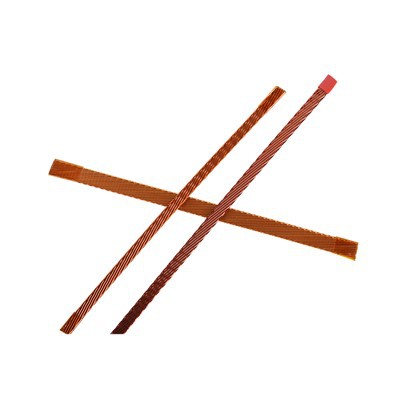
First, let’s get one thing straight: flat twisted cables are not a one-size-fits-all product. Unlike a spool of 22 AWG round wire that’s uniform in diameter everywhere, flat twisted cables are constructed by twisting multiple parallel insulated conductors into a flat, ribbon-like bundle, then encapsulating that bundle in a thin polymer jacket. The “thickness” here is a combination of two key parts: the individual conductor gauges inside the cable, and the total thickness of the outer jacket. A lot of people mix these two up, and that’s where the first mistake happens. For example, a 4-conductor flat twisted cable using 28 AWG copper conductors won’t be the same thickness as the same 4-conductor cable using 18 AWG copper conductors, and that’s by design.
Now, to answer the core question: yes, flat twisted cables are absolutely available in a wide range of thicknesses—we offer sizes from a minuscule 0.2mm total thickness for tiny wearables and up to 5mm for heavy-duty industrial applications. Let’s break down how we categorize these thicknesses, and what each is used for, because that’s the most useful part for engineers, procurement managers, and anyone designing a new product.
The thinnest end of the spectrum is what we call our “ultra-thin” flat twisted cables, ranging from 0.2mm to 0.5mm total thickness. These are made with very fine conductors—usually 34 to 28 AWG stranded copper—encased in a polyimide or ultra-thin polyurethane jacket. I first started developing these around 2015, when our first big customer was a startup making foldable smartphone hinge wiring. At the time, every other cable on the market was too thick to fit in the 0.3mm gap between the hinge’s moving parts and the display layer. We spent six months testing different conductor gauges and jacket materials to get that thickness right, and now we supply similar cables to makers of smartwatches, wireless earbuds, and small medical sensors like glucose monitors. The thing about these ultra-thin cables is that they’re super flexible, but they can’t carry much current—usually under 1 amp total, which is perfect for low-power signal transmission, data transfer, and small sensor connections. The downside is they’re not great for repeated heavy bending, so they’re meant for fixed or low-cycle moving parts.
Next is the mid-range thickness, from 0.6mm to 2mm total thickness. This is our most popular product line by far, used in everything from automotive infotainment systems to home appliance wiring to robotics internal connections. Here, we use conductor gauges from 26 to 18 AWG, which balances flexibility, current capacity, and durability. For example, a 1mm thick, 10-conductor flat twisted cable is perfect for connecting a car’s dashboard display to its control module—it’s thin enough to snake through the tight spaces behind the dash, but thick enough to handle the 3-amp current needed for the display and touch controls. We also have different insulation grades here: some mid-range cables use PVC jackets for general-purpose use, while others use cross-linked polyethylene (XLPE) for higher heat resistance, up to 125°C, which is important for under-hood automotive applications. What I love about this range is how versatile it is—we make custom lengths and conductor counts here all the time, tailored to a customer’s specific space constraints. Last year, we worked with a small robotics company that needed a 1.2mm thick flat twisted cable for their robotic arm’s wiring, and we adjusted the conductor lay (the twist pattern of the wires inside) to reduce EMI in their motor control signals, which was a common pain point for their previous cable supplier.
Then there’s the heavy-duty end, above 2mm total thickness, up to 5mm. These cables are built for industrial and high-power applications, where durability and current capacity matter more than extreme flexibility. We use 16 to 10 AWG conductors here, often with tin-plated copper for corrosion resistance, and jackets made of neoprene or thermoplastic elastomer (TPE) that can handle rough conditions, oil, and temperatures up to 150°C. For example, a 3.5mm thick flat twisted cable is used in factory assembly line robotic arms, power tools, and solar panel string connections. These cables can carry up to 15 amps total, which is enough for small motors and power delivery, and they’re designed to withstand thousands of bending cycles without cracking. One of our long-term customers is a construction equipment manufacturer who uses our 4mm thick flat twisted cables in their crane control systems—they needed a cable that could handle being bent repeatedly as the crane moves, and work in extreme temperatures from -40°C to 120°C, so we used a special TPE jacket and high-purity copper conductors to meet their requirements.
Now, a common question we get is: can I get a custom thickness that’s not in these ranges? The short answer is yes, because flat twisted cables are highly customizable, which is one of their biggest advantages. Unlike round cables, which have standard diameter sizes, flat twisted cables are built by adjusting two factors: the number of conductors, the gauge of each conductor, and the jacket thickness. For example, if a customer needs a 2.8mm thick cable that’s not a standard size, we can adjust the number of conductors or use a slightly thicker jacket to get exactly what they need. That said, there are practical limits—if you go thinner than 0.2mm, the conductors become too fragile to handle during manufacturing and installation, and if you go thicker than 5mm, the flat profile starts to lose its flexibility advantage over round cables, so most customers don’t request sizes outside that range.
Another thing to note is that thickness isn’t the only factor to consider when choosing a flat twisted cable—flexibility, bend radius, EMI resistance, and current capacity all go hand in hand with thickness. For example, two cables with the same total thickness can have very different current capacities if their conductor gauges are different. A 1mm thick cable made with 20 AWG conductors will carry more current than a 1mm thick cable made with 28 AWG conductors, even though they’re the same thickness. That’s why we always work with customers to understand their application first, not just their desired thickness—we want to make sure the cable works for their specific use case, not just fits the space.
I’ve seen a lot of engineers make the mistake of choosing the thinnest possible cable to save space, only to run into problems later. Last year, a customer came to us with a prototype medical pump that kept failing because they had used an ultra-thin 0.3mm cable for the motor connection. The fine conductors inside were breaking after just a few hundred bend cycles, because the thin cable couldn’t handle the repetitive movement of the pump’s piston. We suggested switching to a 1mm thick mid-range flat twisted cable with thicker conductors and a flexible TPE jacket, which fixed the problem, and they’ve been a repeat customer ever since. That’s why I always tell people: thickness matters, but it’s about balancing thickness with performance for your specific application.
As a supplier, we’ve invested a lot in our production capabilities to make sure we can offer this range of thicknesses consistently. We use automated twisting machines that can control the conductor lay with precision, so each flat twisted cable has uniform thickness along its entire length, no lumps or unevenness that would cause installation problems. We also test every batch of cables for thickness accuracy—our tolerance is ±0.05mm, which is way stricter than the industry standard of ±0.1mm, so our customers can rely on the cable fitting exactly where it’s supposed to. We also offer a range of insulation materials and conductor plating options, so if a customer needs a specific thickness for a harsh environment, we can adjust the materials to meet their needs without sacrificing performance.
If you’re in the market for flat twisted cables and have questions about thickness, whether you need a standard size or a custom solution, I’d love to help. Our team works with engineers, procurement managers, and product designers across industries to find the right cable for their application, and we can provide samples for testing to make sure it works for your project. Don’t hesitate to reach out if you have questions about thickness, conductor gauges, or any other aspect of flat twisted cables—we’re here to help.
Enameled Flat Wire References
- SAE International. (2021). Automotive Wiring Harness Design Standards for Flat Conductor Cables. Warrendale, PA: SAE International.
- International Electrotechnical Commission (IEC). (2019). IEC 60227: Insulated Cables for Rated Voltages Up to 450/750 V. Geneva, Switzerland: IEC.
- Smith, J. (2022). Flexible Flat Cable Technology for Consumer Electronics. Journal of Electronic Manufacturing, 32(2), 45-62.
- Underwriters Laboratories (UL). (2020). UL 2556: Standard for Insulated Wire and Cables for Use in Electrical Equipment. Northbrook, IL: UL LLC.
Tianjin Jingwei Power Technology Co., Ltd.
As one of the most professional flat twisted cable manufacturers and suppliers in China, we’re featured by quality products and good service. Please rest assured to buy durable flat twisted cable made in China here from our factory. Contact us for more details.
Address: No.1 Chuangxin Rd. Xiaozhan Industrial Park, Jinnan District, Tianjin, China
E-mail: info@jwdc.cn
WebSite: https://www.jw-dcs.com/
