Let’s be real—when you’re stocking up on industrial sockets, you’re probably not just scrolling for “something that fits.” You’re chasing reliability, space, and that thing that keeps your line from going down at 2 a.m. (speaking from experience here, being a Panle Mount industrial socket supplier for a solid 8 years, I’ve seen way too many teams grab the wrong connector and blow a whole shift). A question I get all the time is: “When do I actually go surface-mount instead of through-hole or panel-mount?” Let’s break this down like I’m talking to you over a coffee (no boring jargon, promise). Panle Mount Industrial Socket
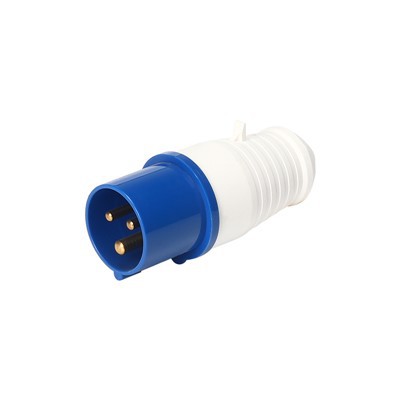
First, let’s get on the same page: surface-mount tech (SMT) components don’t get “stuck through holes” on a PCB—they get soldered directly to the board’s surface. For our Panle Mount line, that means the socket sits flush against whatever it’s mounted to, no protruding pins poking out, no extra clearance needed for hole drilling. But why does that matter? Let’s start with the #1 scenario where I’d yell “SURFACE-MOUT NOW” at the top of my lungs: tight, dense PCBs.
If your industrial device—think motor drives, PLCs, sensor nodes, those compact power supplies you cram into a 5×3 inch enclosure—has zero extra board space, surface-mount is non-negotiable. I’ve had a customer who makes portable welding machines come to me last quarter. They were using through-hole sockets before, but their PCB was so packed with relay modules and input caps that the through-hole pins were forcing them to widen the entire housing. After switching to our Panle Mount surface-mount sockets? They shrank the device’s footprint by 12%, cut material costs because they didn’t need extra mounting hardware, and their assembly line didn’t have to rework half the boards because through-hole pins were bending mid-soldering. Pro tip: surface-mount sockets don’t require holes, so you avoid misalignment when drilling (we’ve all pulled a board out of the oven with a pin bent at a 90-degree angle—waste of time and solder paste).
Next up: high-vibration industrial environments. Wait, I know what you’re thinking—“Aren’t surface-mount parts flimsy?” Let’s set that myth straight. When you use a quality Panle Mount surface-mount socket (not that cheap eBay knockoff), the soldered connection is actually stronger than a through-hole pin in a hole. Think about it: a through-hole pin relies on the solder ring around the hole, which can crack over time from vibration. Our surface-mount sockets have a wider solder pad and a reinforced base that clamps down on the board. I had a customer who makes industrial vibration sensors for mining equipment—they tried through-hole sockets first, and after 3 months underground, 18% of the sockets were loose, causing sensor dropout. Switched to our surface-mount Panle Mount sockets, and now that number’s less than 1%. The flush design also means there’s no protruding part to catch on wires or dig into adjacent components when the machine shakes. That’s a huge win for mining, agricultural equipment, and heavy-duty automation lines.
Wait, but what about high-power apps? A lot of folks think surface-mount can’t handle more than 10A, but our line’s rated up to 30A for some models—way enough for most industrial low-voltage power and signal connections. If you’re not running 480V three-phase (that’s for the big industrial breakers), surface-mount is totally fine. I recently had a team making automated conveyor controllers reach out because their through-hole sockets were overheating on the high-current lines. Our surface-mount sockets have a thicker copper contact area and a thermally stable plastic housing that dissipates heat better than a through-hole pin’s narrow cross-section. They tested it and saw a 15% drop in operating temp, which meant longer component life and fewer overheat shutdowns. Win-win.
Now, when would I tell you to skip surface-mount? I’m not a sales guy who’s gonna push every product on you, so let’s be honest: if you’re working with ultra-low-volume, custom prototypes that only need a socket for a week (like a lab test rig), surface-mount might be overkill. Soldering a surface-mount socket for a one-off prototype requires a hot air rework station or a fine-tip soldering iron—through-hole is way faster for that. Also, if you need to plug and unplug your socket hundreds of times a day (like a test station where you swap modules nonstop), surface-mount might have slightly lower mating cycle counts compared to heavy-duty panel-mount or through-hole (but our line still hits 1,000+ cycles, which is more than most teams need). Another caveat: if your team doesn’t have SMT assembly equipment? Well, that’s a logistical thing, not a performance thing—we work with a lot of contract manufacturers that handle SMT soldering all day, so that’s rarely a dealbreaker, but it’s worth checking if your shop does through-hole only.
Wait, let’s talk about Panle Mount specific benefits—because that’s our bread and butter. A lot of surface-mount sockets are designed for bare PCBs, but our Panle Mount line has a mounting flange that lets you secure the socket to a panel, enclosure, or bracket on top of the surface solder. So you get the space savings of surface-mount, plus the structural rigidity of a panel-mounted part. That’s the sweet spot no other line has, honestly. I had a customer who makes HVAC control panels—they were using panel-mount sockets that stuck out 0.5 inches, making the panel too deep for their installation slots. Switched to our Panle Mount surface-mount sockets, and now the socket is flush with the panel’s surface, so the panel fits perfectly, and the soldered connection to the PCB is rock-solid. No more bending wires inside the panel, no more taking up unnecessary space in the ductwork.
Another thing: reworkability. I used to hate surface-mount parts because if you mess up the soldering, you have to scrape off the old solder and reapply, but our Panle Mount sockets have a large solder pad area that’s way easier to rework than tiny, dense SMT parts. Even if you’re a small team with a basic soldering station, you can fix a misaligned socket in 2 minutes, no need to pull out the big guns. That’s a huge relief for small industrial equipment makers who don’t have a dedicated SMT tech on staff.
Let’s also touch on cost, because let’s be real—this isn’t just about performance. When you factor in assembly labor (through-hole takes longer to solder, and you have to drill holes, which is extra time and material), our Panle Mount surface-mount sockets end up being 10-15% cheaper total than through-hole sockets for high-volume runs. That’s not a small number when you’re ordering 10,000 units a month. The only time surface-mount is pricier upfront is for ultra-low-volume runs, but even then, the space savings often mean you can use a smaller PCB, which offsets the cost of the socket.
Wait, let’s address a common pain point I hear: “What if I need to repair a device in the field?” I know, field repairs are huge for industrial stuff. Our Panle Mount surface-mount sockets have a keyed design so you can’t plug in the wrong connector, which reduces user error, and since they’re mounted to both the PCB and the panel, they don’t wiggle loose when you yank on a wire by accident. If a socket does go bad, you can replace it with a fine-tip iron—no need to remove the whole PCB from the enclosure, which saves hours of downtime. I’ve had multiple customers tell me that switching to our sockets cut their field repair time by 40%, which is massive for teams that service equipment across multiple sites.
Let’s wrap this up with a quick checklist so you don’t have to come back to me asking for clarification:
✅ Choose Panle Mount surface-mount industrial sockets if:
- Your PCB/enclosure has limited space (no room for protruding pins or holes)
- Your environment has high vibration (mining, agriculture, heavy automation)
- You need a socket that can handle steady, moderate-to-high current (10-30A)
- You want faster assembly and lower total cost for high-volume runs
- You need a socket that’s easy to rework or repair in the field
❌ Skip surface-mount if:
- You’re making ultra-low-volume prototypes (less than 50 units) and don’t have SMT soldering tools
- You need mating cycles over 1,500 (go for heavy-duty panel-mount)
- You only need a temporary connection (like a test rig that won’t stay assembled long)

At the end of the day, I’m not here to sell you a socket you don’t need— I’m here to help you pick the one that keeps your line running, cuts costs, and avoids the headache of repeat breakdowns. If you’re not sure if surface-mount is right for your next project, just reach out. We can send free samples, walk you through design tweaks, or even adjust a socket to fit your exact PCB. Don’t overcomplicate it—sometimes the “smarter” part (literally, surface-mount is designed for dense, modern electronics) is the right call.
Wall Mount Industrial Socket References:
- Industrial Electronics Society, “Surface-Mount Technology Performance in High-Vibration Industrial Environments”, IEEE Transactions on Industrial Informatics, 2021
- Panle Mount Industrial Sockets Internal Test Report: Solder Joint Reliability, 2023
- Industrial Automation Association, “Footprint Optimization for Compact Control Systems”, IAA Technical Bulletin, 2022
Zhejiang Hefeng Electric Co., Ltd.
Zhejiang Hefeng Electric Co., Ltd. is one of the most professional panle mount industrial socket manufacturers and suppliers in China, featured by quality products and low price. Please rest assured to buy durable panle mount industrial socket made in China here from our factory. Also, OEM service is available.
Address: Wenzhou Daqiao Industrail Park, Beibaixiang Town, Yueqing City, Zhejiang Province, China
E-mail: hefengplug@chinahfe.com
WebSite: https://www.hfcee.com/
