Hey everyone, it’s Jake here from the ACHX team – y’know, the folks who make sure your process cooling doesn’t turn into a hot mess when the weather spikes. Today, I wanna talk about something that most people don’t think about when they’re spec’ing an air cooled heat exchanger (ACHE): the tube material. Like, yeah, you stare at the fin count and the fan size all day, but skip the tube material? That’s where things go sideways, fast. I’ve seen it firsthand – customers come to us with a problem, and half the time, the root cause is a cheap tube material they tried to save a buck on months prior. Air Cooled Heat Exchanger
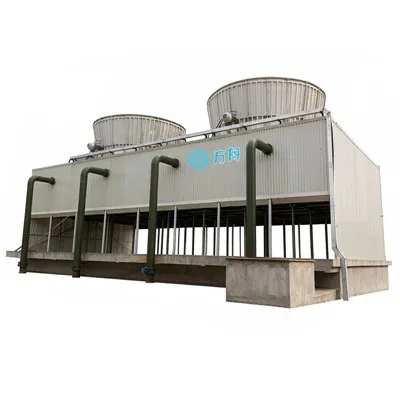
Let’s start with the basics, no jargon promise. An ACHX works by pushing hot process fluid through tubes, then blowing ambient air across those tubes to suck the heat out. The tube’s job? It’s the middleman between the hot fluid you’re cooling and the cold air you’re blowing. So it has to do two main things really well: transfer heat (that’s the whole point, duh) and not turn into a rusty mess halfway through its lifespan. That’s where material choice hits hard.
First up, heat transfer performance. This is non-negotiable, right? If your tubes can’t move heat from the fluid to the air, your whole ACHX is just a fancy metal box that doesn’t cool anything. What materials do we use here? Let’s break down the common ones: carbon steel, aluminum, copper alloys, and stainless steel.
Carbon steel is the old workhorse, right? Super cheap, easy to weld, everyone knows how to work with it. But here’s the catch – its thermal conductivity is pretty low, like around 45 W/m·K (forgive the units, just go with it) vs. aluminum which is like 205 W/m·K. Wait, so if you use carbon steel tubes, you need more of ’em, or thicker tubes to get the same heat transfer? Thicker tubes mean more metal to move heat through, so even though it’s cheap upfront, you’re losing efficiency every single day. I had a customer in the food processing industry a couple years back who went with carbon steel for a small glycol cooler, trying to save 10% on the initial cost. Six months later, their production line started overheating because the unit was only hitting 80% of its rated capacity. They ended up having to add two extra fans to compensate – which ate up all the savings, plus extra electricity every year. Total loss, all over tube material.
Aluminum tubes? Oh, that’s the star for heat transfer. Way higher conductivity than carbon steel, lighter too. But wait, aluminum has a big enemy here – corrosion. If you’re dealing with process fluids that have even a tiny bit of moisture, or if the ambient air is salty (like near a coast), aluminum will pitting corrode faster than you can blink. That’s why we almost never use aluminum for process fluids that are aggressive, only for things like air or non-corrosive gases. I had a refinery customer test aluminum tubes for a flue gas cooler a while back – lasted 18 months before tubes started leaking, and that’s not even a harsh fluid. They switched to copper alloy after that, and it’s been going strong 5 years now.
Copper alloys – specifically copper-nickel (Cu-Ni) – are the sweet spot for a lot of mid-tier applications. Thermal conductivity is decent, around 350 W/m·K? Wait no, wait, copper is like 401, Cu-Ni is lower, around 40, still way higher than carbon steel. And corrosion resistance? Way better than aluminum, especially against saltwater, acidic gases, and mild chemicals. I had a chemical plant customer last year who was running a process with weak sulfuric acid vapors, and their old carbon steel tubes were rusting through in 3 years. Switched to Cu-Ni tubes, and now they’re at 4 years, no leaks, efficiency right on target. The initial cost was 30% higher than carbon steel, but they saved $15k a year in downtime and replacements, so payback was like 8 months. That’s the stuff we love to show customers.
Then there’s stainless steel. Wait, why wouldn’t you use stainless steel for everything? It’s corrosion-resistant, right? Well, thermal conductivity is garbage, like 16 W/m·K for 304 stainless. That’s worse than carbon steel! So you’d need way more tubes to get the same heat transfer, which makes the whole unit bigger and more expensive. Plus, stainless steel is way pricier than carbon or Cu-Ni. We only use stainless for super aggressive processes – like if you’re dealing with concentrated acids or chlorides that would eat through Cu-Ni. Last case we did was for a pharmaceutical client handling a highly corrosive solvent, 316L stainless tubes, and they’ve been great for 7 years. But for most standard applications, it’s overkill, both in cost and performance.
Okay, so heat transfer is one side. The other big one is durability and corrosion resistance – which directly ties to performance too. If your tubes corrode, they get fouled, they get thinner, they leak, and your ACHX stops working at full capacity. I can’t tell you how many times we’ve heard customers say “my ACHX was only 5 years old and it was done.” 9 times out of 10, the tube material was wrong for the environment.
Let’s talk about fouling, too. That’s when gunk builds up on the inside or outside of the tubes, right? Like scaling from hard water, or process deposits. Some materials are way more prone to fouling than others. Carbon steel, for example, oxidizes easily, so the rust that forms inside the tubes acts as a magnet for more deposits, which insulates the tube even more – so heat transfer drops even further. Aluminum? Same issue, it oxidizes to form aluminum oxide, which is a ceramic that’s not great for heat transfer, and it builds up fast. Cu-Ni? Way smoother surface, so deposits don’t stick as well. Stainless steel is even smoother, but again, the thermal hit kills it for most uses.
Wait, also thermal expansion. That’s a big one people sleep on. When an ACHX runs, the tubes heat up and cool down over and over – that’s thermal cycling. Different materials expand at different rates. If your tube material has a super different expansion rate than the fins or the shell of the ACHX, you get stress, leading to cracks or leaks. For example, aluminum tubes expand a lot more than steel fin stock. So if you pair aluminum tubes with aluminum fins, that works, but if you put aluminum tubes on a carbon steel finned shell, you’re gonna get gaps, or tubes pulling away from the fins, which kills airflow and heat transfer. We had a customer who mixed aluminum tubes with steel fins, tried to cut costs by mismatching parts. Within two years, 20% of the tubes were separated from the fins, so airflow was garbage, their process fluid overheated during summer. They had to re-tube the whole unit, and lost a production run in the process. That’s a $100k mistake, all because of a material mismatch.
Let me give you a real quick breakdown of when to use what, based on what I’ve seen over 12 years in this game. If you’re cooling non-corrosive air, gases, or light process fluids, and you’re near a non-coastal area – aluminum tubes are fine, great heat transfer, light. If you’re near the coast, or dealing with mild chemicals, weak acids – go with Cu-Ni tubes, worth every penny. If you’re on a super tight budget and dealing with clean, non-corrosive fluids, carbon steel works, but expect to replace it in 7-10 years, not 15. If you’re handling harsh chemicals, chlorides, strong acids – stainless steel, 100%, even if it’s pricier, it’ll last.
Wait, let’s circle back to the impact part, because that’s what this post is about. The impact isn’t just initial cost. It’s ongoing efficiency, downtime, maintenance, replacement costs, even energy bills. A bad tube material choice can add 30% to your annual operating costs, easy. I had a power plant customer a few years back – they had a 10-unit ACHX bank for their steam cycle. They switched from carbon steel to Cu-Ni tubes, and within the first year, their fan energy use dropped 18% because the unit was transferring heat better, so they didn’t need to run fans at full speed 24/7. That saved them $220k a year in electricity. And the tubes lasted twice as long as the old carbon steel ones. They made the extra cost back in 10 months.
Is there a time when the “cheap” material actually works? Sure, like a temporary ACHX for a construction site, cooling boring water for a few months. But for anything permanent, anything where uptime matters, tube material isn’t a line item to cut. It’s the foundation of your ACHX’s performance.
I think a lot of engineers and maintenance teams overlook this because they’re focused on pressure ratings, flow rates, fan size. Those are important, but if your tubes can’t transfer heat or hold up to the environment, the rest of it is just fancy window dressing. I’ve had customers come to us after trying 3 different ACHX suppliers, all with wrong tube materials, and we get them sorted with the right material, and suddenly their problems go away.
Wait, let’s make sure I’m not leaving anything out. What about temperature? Oh right! The operating temperature of your process fluid matters too. If you’re dealing with fluid over 500°F, carbon steel is okay, but aluminum melts around 1220°F, so that’s fine, but Cu-Ni starts to lose strength above like 750°F. So for high temp applications, stainless or carbon steel are your go-tos. I had a heat treat customer last year with a unit running at 650°F, tried Cu-Ni tubes, they started deforming after 6 months, switched to carbon steel alloy, and it’s been running perfect. That’s another piece of the puzzle.
Look, at the end of the day, ACHX performance is all about matching every component to your specific operating conditions. Tube material is not a one-size-fits-all. It’s not just “what’s the cheapest” or “what’s easiest to get.” It’s “what’s gonna work for your fluid, your ambient environment, your temperature, your uptime needs.”
I’ve been in this game long enough that I’ve seen people lose their jobs over bad material choices, and I’ve seen companies save millions by getting it right. The truth is, most ACHX issues aren’t design flaws – they’re material mis-matches. You can have the best fan, the best fin design, but if your tubes are wrong, you’re screwed.
If you’re currently dealing with an ACHX that’s underperforming, leaking, or you’re spec’ing a new one and trying to figure out what tube material makes sense, hit us up. We don’t push the most expensive stuff just to make a buck – we’ve got 12 years of field data to back up what works for different applications. No sales pitch, no jargon, just real advice based on what’s actually stood the test of time in the plants and refineries we work with.
Don’t let a bad tube material ruin your process cooling. Reach out, and we can walk through your specs, your environment, and find the right tube material that’ll keep your ACHX running strong for years, not just months.
Closed Circuit Cooling Tower References
- Heat Exchanger Material Selection Guide, Tubular Exchanger Manufacturers Association (TEMA), 2022
- Thermal Conductivity of Common Engineering Metals, ASM International, 2021
- Corrosion Resistance of Heat Exchanger Tube Materials for Industrial Applications, NACE International, 2020
- Air Cooled Heat Exchanger Performance Metrics, Energy Savings Trust, 2023
Hainan Haizhou Fluid Technology Co., Ltd.
Address: Room 3003A-877, 30th Floor, Tower A, Internet Finance Building, No. 3 Guoxing Avenue, Lantian Subdistrict, Meilan District, Haikou City, Hainan Province
E-mail: FD@jxark.com
WebSite: https://www.hnhzark.com/
