If you’ve ever dropped a AA battery into a remote control, waited a week for it to power on your kid’s game controller, or noticed a $10 wireless drill running slower on a “cheap” off-brand battery than a name-brand one, you’ve probably wondered why that happens. As a consumer battery supplier, I get this question every single day. More specifically, people often ask: What’s internal resistance, exactly, and why does it matter for the batteries we’re all buying for daily use? Let me break this down without getting too jargon-heavy—no textbooks, just real experience from working with batteries for the last 12 years. Consumer Battery
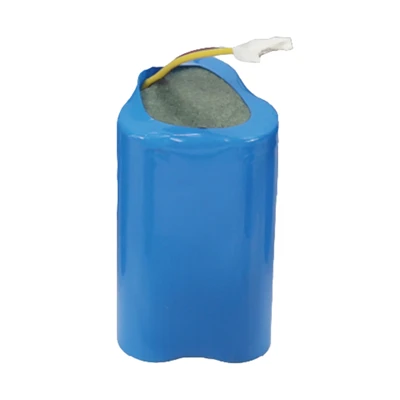
First, let’s start with a basic truth: No battery is perfect. Even the most expensive, top-tier alkaline or lithium-ion battery isn’t a perfect source of voltage, where every electron leaves the positive terminal exactly as it’s meant to, and none gets “trapped” inside the battery before reaching your device. Internal resistance is that tiny (or not-so-tiny) barrier that gets in the way. Think of it like a narrow pipe in a water line. You turn on the tap (that’s your battery’s voltage, the force pushing electrons out), and most water flows through—but some gets backed up, slows down, or gets lost pushing through the narrow part. That’s internal resistance. It’s made up of a few small parts: resistance from the battery’s metal terminals, resistance from the chemicals inside the cell, and resistance from the separators that keep the positive and negative sides from touching (which is also what prevents a short circuit).
The key here is that internal resistance isn’t a fixed number for a given type of battery. It changes based on three big things: the battery’s size, its chemistry, and how old or how full it is. Let’s use common examples that most people can relate to. Take AA alkaline batteries, the ones you use in remotes or flashlights. A brand-new AA alkaline from a major brand usually has an internal resistance between 0.1 and 0.2 ohms. A brand-new C-size alkaline, which is bigger, has a lower internal resistance—usually around 0.05 to 0.1 ohms. Why? Because a bigger battery has more chemical inside, and the metal parts that carry current are thicker, so there’s less of that “narrow pipe” slowing electrons down.
Now, if you grab a no-name AA battery from a discount store, its internal resistance might be 0.5 to 1 ohm, sometimes even higher. That’s why it feels weak. That extra resistance means more of the battery’s power is wasted as heat inside the cell before it even reaches your device. You’re paying for 1.5 volts, but by the time it gets to your remote’s circuit board, you might only have 1.2 volts left—just enough to make the remote work, but not enough to power a device that needs consistent current, like a wireless mouse or a small LED string light. For rechargeable consumer batteries, like the lithium-ion ones in power banks or drill batteries, the numbers shift a bit. A new 18650 lithium-ion cell (the common cylindrical one) has an internal resistance around 0.02 to 0.05 ohms, way lower than an alkaline. That’s why rechargeables can deliver high bursts of power fast—like when you trigger a drill or a portable blender. But as they get older, that internal resistance goes up. A lithium-ion cell that’s 2 years old, with 500 charge cycles, might have internal resistance double that of a new one. That’s why old power tools slow down, or power banks stop holding charge as well.
I’ve seen this play out so many times in my own warehouse. Last year, a small construction company came to us because their drill batteries were dying halfway through a job, and they were tired of buying cheap replacements from big box stores. They were buying off-brand lithium-ion batteries that cost $5 each, thinking they were saving money. But when we tested them, their internal resistance was over 0.2 ohms—four times higher than a quality 18650 cell. That extra resistance meant every time the drill needed a burst of power to drive a screw into a stud, the battery was wasting power as heat. They ended up going through three off-brand batteries for every one of our premium ones, and the total cost was 3x higher. That’s the thing about internal resistance: It’s not something you can see on the packaging, but it’s one of the biggest factors that determines how long a battery will actually work for your needs.
Another common question I get: Does internal resistance change when a battery is being used? Absolutely. When a battery is discharging (giving power to your device), the chemical reactions that produce electricity create a small amount of byproduct. In alkaline batteries, that’s usually a build-up of zinc oxide on the anode, which adds to internal resistance as the battery gets closer to dead. For lithium-ion, it’s a thin layer that forms on the electrodes over time, called solid-electrolyte interphase (SEI). That SEI layer is normal, but if it gets too thick, it increases internal resistance and makes the battery less efficient. That’s why a lithium-ion battery will slowly lose power even when it’s not being used, sitting in a drawer—internal resistance is creeping up the whole time.
So why does this matter for you, the consumer? Let’s tie it to real use cases. If you’re using batteries for low-drain devices—like a remote control, a wall clock, or a smoke detector—internal resistance is less of a big deal. Those devices only pull a tiny amount of current, so even a battery with higher internal resistance will work just fine. But if you’re using them for high-drain devices—like a wireless drill, a portable speaker, a camera flash, or a kids’ ride-on toy—internal resistance is make-or-break. A battery with high internal resistance can’t supply the steady, high current those devices need. That’s why your cheap AA dies in 20 minutes of running a speaker, but a quality name-brand one lasts 4 hours. The difference isn’t just “more power”—it’s lower internal resistance delivering that power to your device instead of wasting it as heat inside the battery.
As a supplier, this is why I push our team to test every battery before it goes out the door. We don’t just check voltage (which is easy to measure with a multimeter); we also check internal resistance, because two batteries can have the same voltage but very different performance. Last quarter, we had a client who complained that our rechargeable AA batteries were lasting half as long as a competitor’s, even though their specs said the same. When we tested both, we found the competitor’s batteries had an internal resistance 3x higher than ours. The client was getting the same voltage, but our batteries were able to deliver more of that voltage to their high-drain device (a portable oxygen concentrator for a home healthcare patient) instead of wasting it. We explained this to the client, and they switched all their orders to us. That’s the value of knowing internal resistance—it’s not a technical detail, it’s how you keep a device working when you need it most.
I also want to clear up a common myth: Some people think that “low internal resistance” is just a marketing buzzword, something companies put on packaging to trick people into spending more. That’s true of a lot of marketing, but it’s not a myth. At our facility, we test every batch of batteries for internal resistance, and we share those numbers with clients who ask. For example, our premium alkaline AA batteries have a maximum internal resistance of 0.18 ohms for new cells, and we won’t ship any batch that’s higher than that. Our rechargeable 18650 cells have a max internal resistance of 0.04 ohms, which is lower than many of the premium name brands on the market. When people see those numbers, they’re often surprised—they didn’t realize that even within the same type of battery, there’s that much variation.
So what should you look for when you’re buying consumer batteries, beyond internal resistance? Well, chemistry matters a lot. Alkaline batteries are the most common, and they work well for low and moderate drain devices, but they have higher internal resistance than lithium-ion. Lithium primary batteries (the ones that are not rechargeable, used in things like smart watches or GPS trackers) have even lower internal resistance than alkaline, which is why they last so long in devices that need small, steady power for years. Rechargeable lithium-ion batteries have the lowest internal resistance of all common consumer chemistries, which is why they’re used in power tools and portable electronics.
Another factor is the battery’s age. Even if you buy a brand-new battery that’s been sitting on a shelf for two years, its internal resistance will be higher than a brand-new battery that was made a month ago. That’s why it’s always better to buy batteries from a retailer that turns their stock fast—look for the “manufacture date” if it’s available, or just buy from a store that sells batteries in high volume, so you know the stock isn’t sitting around for months.
Now, let’s talk about what happens when internal resistance gets too high. If you’re using a battery with internal resistance that’s way too high for your device, a few things can happen. The device might work sluggishly—like a drill that takes 10 seconds to start instead of 2. It might shut down unexpectedly, even if the battery has “some” power left. Worst case, for rechargeable batteries, too high internal resistance can cause the battery to overheat when you charge it, which reduces its lifespan even more. That’s why using cheap, no-name batteries for high-drain devices isn’t just a waste of money—it can damage your devices over time, too.
As someone who’s been in this business for a decade, I’ve seen every mistake when it comes to choosing batteries. I’ve had a friend who spent $200 on a set of rechargeable batteries for his camera, only to find they died mid-wedding photoshoot because he bought off-brand ones with high internal resistance. I’ve had a small business owner who bought 1,000 cheap batteries for a trade show, only to have 70% of them fail when the LED signs he powered with them died. All of these issues come back to a misunderstanding of internal resistance. It’s not just a technical term—it’s the reason a battery does what it’s supposed to do.
So if you’re someone who buys batteries regularly, and you’re tired of wasting money on ones that don’t perform, the next time you order, ask about internal resistance. It’s a simple question, and a good supplier will be able to tell you the numbers. If you’re a business owner or a consumer who needs reliable power for your devices, working with a supplier who tests their batteries for internal resistance makes all the difference. We’ve been supplying consumer batteries to homeowners, small businesses, and even industrial clients for years, and our focus on real, tested performance (not just flashy packaging) is why our clients come back.

If you’re looking to order consumer batteries, or you have questions about which type is right for your device, reach out to our team to discuss your needs. We can help you pick the right chemistry, the right size, and the right internal resistance to make sure your devices work when you need them.
Electric Tricycle Battery References
- Linden, D., & Reddy, T. B. (2002). Handbook of Batteries (3rd ed.). McGraw-Hill.
- U.S. Department of Energy. (2021). “Battery Basics: Internal Resistance.” Energy.gov.
- Winter, M., & Brodd, R. J. (2004). “What Are Batteries, Fuel Cells, and Supercapacitors?” Chemical Reviews.
Zhuhai Greaton Electronic Technology Co., Ltd.
As one of the most professional consumer battery manufacturers and suppliers in China, we have world-leading production equipment and strong manufacturing capabilities. Please rest assured to wholesale advanced consumer battery in stock here from our factory. Customized orders are welcome.
Address: 2nd Floor, Building A3, No. 6, Liulu, Xinqing Science and Technology Industrial Park, Jing’an Town, Doumen District, Zhuhai City
E-mail: wangchen1@psbattery.cn
WebSite: https://www.cngreaton.com/
